

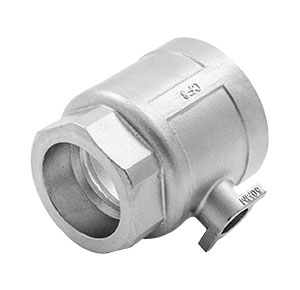
Industrial valves exist to control risk. Every pressure surge, thermal cycle, corrosive medium, and vibration load passes directly through the valve body. Surface finish and dimensional accuracy attract attention during inspection, yet operational failures rarely originate from polished faces. Failures emerge from inside the metal, long before machining begins. Casting quality determines whether a valve behaves as a pressure-retaining asset or a hidden liability. In large-scale industrial systems, casting integrity defines performance boundaries that machining cannot rewrite.
Casting as the Structural Core of Valve Performance
Valve bodies, bonnets, and pressure housings operate as structural components, not decorative shells. Molten metal behavior during mold filling and solidification governs internal density, grain continuity, and defect formation. Shrinkage cavities, gas porosity, hot tears, and inclusions develop at this stage. Once solidification completes, internal discontinuities remain permanently locked inside the metal.
Machining removes material but cannot reconstruct internal cohesion. A valve body with internal porosity may pass dimensional inspection yet fail under cyclic pressure. High-quality castings distribute stress uniformly across the body wall, allowing predictable mechanical response under load. Low-quality castings concentrate stress around invisible voids, accelerating fatigue and crack initiation. Selection of castings suppliers for valves therefore determines whether structural reliability exists before a single machining operation begins.
Internal Soundness Versus External Precision
Machining delivers measurable precision. Internal soundness delivers survivability. Pressure-retaining components depend on uninterrupted metal continuity rather than surface smoothness. Internal defects act as crack nucleation points under thermal expansion and pressure pulsation. Such defects remain invisible during routine machining and only reveal presence during service failure.
A mirror-finished flange face cannot compensate for subsurface porosity beneath a pressure boundary. Operational reality confirms that leakage, rupture, and deformation originate from internal weaknesses rather than surface inaccuracies. Reliable valves emerge from castings engineered for density control, controlled solidification, and defect minimization. This reality elevates castings suppliers for valves from vendors to risk-control partners.
Metallurgy Is Fixed During Casting, Not Machining
Material grade selection alone does not guarantee material performance. Chemical composition consistency, grain structure formation, and carbide distribution occur during melting and solidification. Improper temperature control or poor melt cleanliness introduces segregation and reduces corrosion resistance. Once metal solidifies, alloy imbalance becomes permanent.
Machining alters shape, not metallurgy. Cutting tools expose metal but cannot homogenize elemental distribution or heal segregated zones. Valves exposed to aggressive media depend on uniform metallurgical structure for corrosion resistance and pressure integrity. Controlled melting practices and disciplined solidification protocols separate dependable foundries from commodity operations. Competent castings suppliers for valves treat metallurgy as a performance requirement rather than a specification checkbox.
Geometry, Flow Stability, and Casting Precision
Valve efficiency depends on internal flow geometry. Turbulence accelerates erosion, raises pressure drop, and shortens service life. Casting enables complex internal contours that machining cannot economically reproduce without excessive material removal. Near-net-shape casting preserves wall thickness while maintaining smooth internal transitions.
Excessive machining to correct poor casting geometry introduces thin sections and stress risers. Properly engineered castings minimize corrective machining and protect structural continuity. Valve bodies designed for flow stability must emerge from molds that respect functional geometry rather than relying on machining to compensate for poor initial formation. Advanced castings suppliers for valves align mold design with fluid dynamics rather than treating valve bodies as simple hollow shells.
Machining Exposes Casting Truth
Machining does not hide casting defects; machining reveals casting defects. Porosity appears during boring. Inclusions surface during facing. Micro-cracks propagate under tool pressure. Such outcomes originate from casting-stage failures rather than machining error.
Production losses, rework cycles, and part rejection escalate when casting quality remains inconsistent. High-quality castings enter machining with structural stability, allowing machining to focus on tolerance refinement rather than damage control. Manufacturing efficiency therefore depends directly on casting reliability. Organizations prioritizing castings suppliers for valves with proven defect-control systems achieve higher yield and lower downstream risk.
Quality Control Must Begin Before Machining
Inspection after machining addresses symptoms, not causes. Effective quality control integrates mold design validation, controlled cooling, and internal defect detection before machining begins. Non-destructive evaluation identifies subsurface issues that dimensional inspection cannot detect.
Valves operating in critical service demand predictable behavior under worst-case conditions. Predictability originates from disciplined casting processes rather than post-machining inspection. Suppliers lacking internal quality systems transfer risk downstream. Robust castings suppliers for valves absorb responsibility at the metal formation stage, where risk control delivers the greatest impact.
Lifecycle Economics Are Set at the Casting Stage
Initial procurement cost often overshadows lifecycle cost during supplier selection. Field failures, shutdowns, maintenance interventions, and safety incidents impose costs that dwarf marginal casting savings. Valves built on sound castings operate longer, fail less often, and require fewer interventions.
Lifecycle performance metrics favor castings engineered for durability rather than minimum cost. Structural integrity reduces warranty exposure and operational disruption. Industrial buyers evaluating castings suppliers for valves through a lifecycle lens consistently outperform cost-driven sourcing strategies.
The Functional Boundary Between Casting and Machining
Machining refines geometry, sealing accuracy, and assembly fit. Casting establishes strength, density, and durability. These roles remain distinct and non-interchangeable. Machining excellence cannot override metallurgical weakness. Casting excellence amplifies machining value.
Misunderstanding this boundary leads to valves that appear precise but degrade rapidly under load. Respecting this boundary produces valves that maintain performance across extended service intervals. Serious valve manufacturing begins with casting discipline rather than machining optimism.
Industrial Risk and Casting Accountability
Valve failure in large-scale systems triggers cascading consequences. Process instability, environmental exposure, regulatory scrutiny, and safety hazards trace back to material failure more often than machining error. Casting integrity functions as the first line of defense against such outcomes.
Organizations committed to operational continuity prioritize foundry capability alongside machining expertise. Dependable castings suppliers for valves operate as strategic contributors to system reliability rather than interchangeable vendors.
Closing Perspective
Valve performance originates inside the metal. Casting quality defines structural integrity, metallurgical stability, and fatigue resistance. Machining enhances accuracy but cannot reconstruct internal strength. Treating casting as a foundational engineering discipline transforms valve reliability from expectation to certainty.
Selection of castings suppliers for valves represents a performance decision with long-term operational consequences. Precision begins at the mold, not at the machine.